
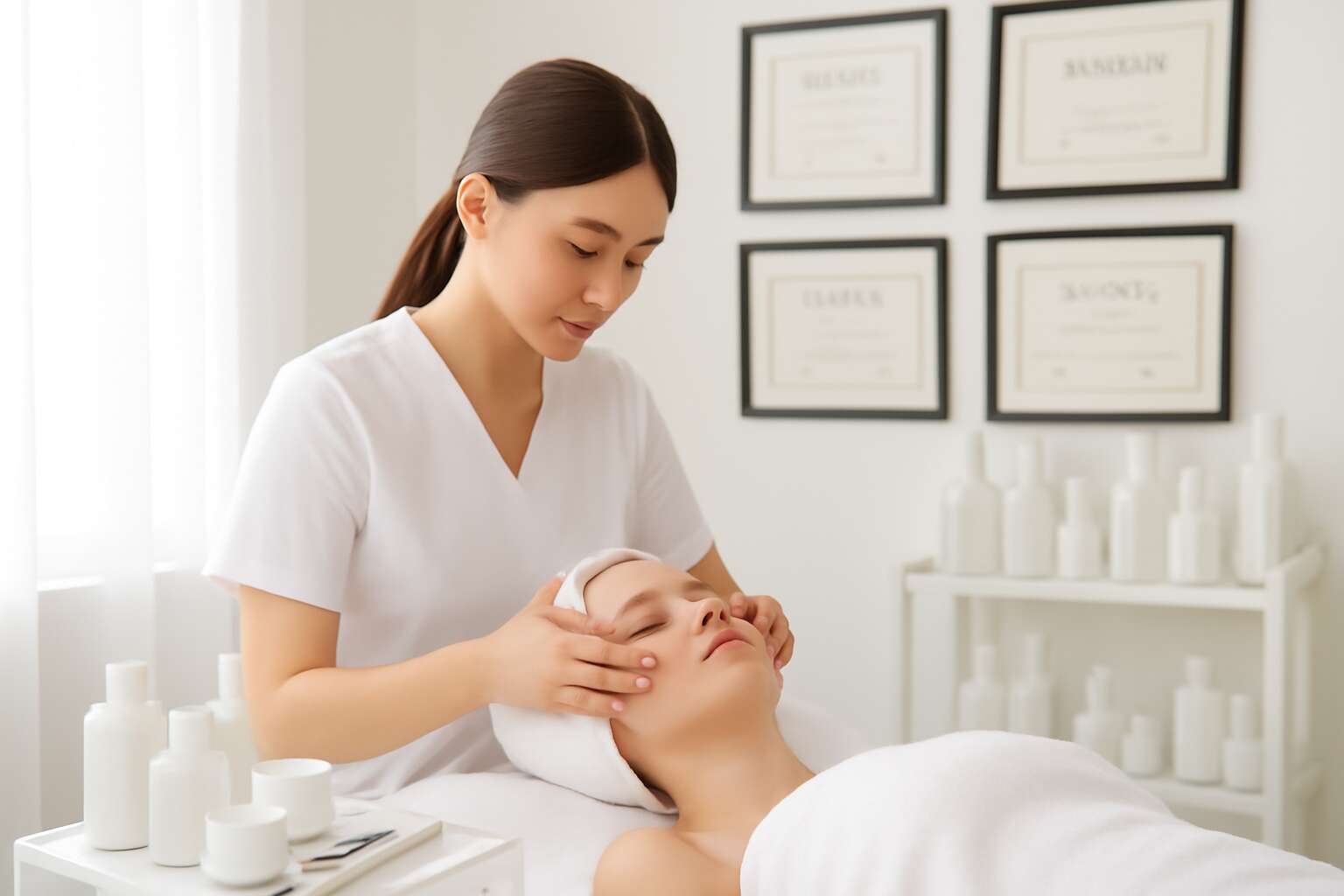
Comprehensive outline for beauty diploma programs
Foundation and program overview: What the diploma covers and who should enroll
From a village salon to a bustling city studio, the journey to professional beauty begins with a rock-solid foundation. “A solid foundation is the difference between good service and lasting trust,” a mentor often says. In South Africa’s vibrant beauty scene, a beautician diploma course opens doors to client-focused artistry, hygiene mastery, and real-world professionalism. The foundation and program overview cover theory, hands-on practice, and the ethics that keep clients returning.
- Foundational science: skin anatomy, safety, and sanitation
- Practical technique: facials, waxing, makeup, and basic spa services
- Consultation and professionalism: client communication, ethics, and business basics
Who should enroll? Aspiring beauticians, career changers in rural communities, and anyone with a caring touch who wants to help people feel their best. This program equips you for entry-level roles in salons, spas, or clinics and creates a doorway to further studies and a trusted local client base.
Foundation and program overview: Career opportunities in the beauty industry
In South Africa’s vibrant beauty scene, a single beautician diploma course can unlock a world of artistry and enterprise. It’s more than aesthetics; it’s a pathway to client trust and professional resilience that salons and clinics prize.
This comprehensive outline guides aspirants through career opportunities in the beauty industry, from intimate studio work to broader wellness teams. Think of paths in salons, spas, medical aesthetics, and education—each a canvas for skill, charisma, and reliability.
- Salon stylist and facialist
- Spa supervisor or clinic support
- Product education, brand representation, and mobile services
With South Africa’s diverse markets, graduates pivot easily between independence and collaboration, weaving artistry with dependable service. The journey is not merely a credential, but a living vocation that invites ongoing growth and connection.
Foundation and program overview: Expected outcomes and skill development
In South Africa’s shadowed studios, skill becomes a quiet beacon. “Skill is the quiet engine of every client’s confidence,” a maxim you hear in the hush before the chair creaks to life, and the beautician diploma course is built to iron that engine into motion! This comprehensive outline highlights the expected outcomes and the depth of skill development awaiting aspirants, turning potential into practiced artistry.
- Client-centred consultations and tailored treatment plans
- Sanitation, safety, and hygiene aligned with SA standards
- Core techniques across skincare, makeup, waxing, nails
- Product knowledge, brand representation, and retail confidence
- Professional communication, ethics, and reliable client care
Beyond technique, the program forges professional resilience—an ability to adapt to salons, spas, clinics, or mobile teams across South Africa’s diverse markets. Artistry meets reliability, and the journey through this diploma path becomes a living vocation rather than a mere credential.
Admission and eligibility: Entry requirements and age criteria
Across South Africa’s vibrant beauty scene, credentials matter as much as craft. The market thrives on skilled practitioners who combine artistry with safety, and the beautician diploma course is designed to turn potential into practiced proficiency.
Admission and eligibility vary by institution, but typical requirements keep a clear path for aspiring professionals. You’ll often find these essentials:
- Minimum age: 17 years or older
- Grade 12 (or an equivalent qualification) or demonstrated literacy for course materials
- Proficiency in English (written and spoken)
- Health and safety declarations and consent forms if under 18
- Completed application form and payment of any registration fees
This framework ensures entrants are prepared for the program’s immersive modules and supervised practice, while aligning with South Africa’s standards. The journey through the beautician diploma course promises a blend of theory, technique, and professional conduct, shaping a career ready for salons, spas, clinics, or mobile teams.
Admission and eligibility: Documentation and application steps
A clean paper trail is your first passport to a successful beautician diploma course, and admissions teams in South Africa know it. An orderly outline of documentation and application steps turns ambition into a workable plan, keeping pace with local standards and salon-ready expectations. The tone is practical, not mystifying, and the path to enrollment feels less like a maze and more like a well-lit doorway.
- Complete the application form and submit it along with any registration fees.
- Gather documents: government ID, academic transcripts or a certificate, proof of address, and any health and safety declarations.
- Provide evidence of English proficiency or ability to engage with course materials, as required by the institution.
- If under 18, submit parental consent and any necessary safety declarations.
- Submit and await confirmation, with readiness for interviews or entrance checks if requested.
Admission and eligibility: Tuition, funding, and scholarships
Certification opens doors that raw talent alone cannot. In South Africa, navigating a comprehensive beauty journey starts with clarity on tuition, funding, and scholarships tied to a well-structured beautician diploma course. Tuition varies by college, but the framework remains transparent: upfront kit costs, predictable installment plans, and credits aligned with local salon standards. The numbers hum with potential when costs are clear, and the result is a path that feels less like a maze and more like a well-lit doorway into professional practice.
- Institutional scholarships and bursaries offered by the college
- Flexible payment plans and installment options
- Government or vocational training grants supporting beauty diplomas
- Industry sponsorships or salon partnerships that offset tuition
Understanding these elements helps planners map a course toward enrollment, guiding you with confidence through SA’s vibrant beauty landscape.
Curriculum and practical training: Core modules and skill sets
In South Africa, a recent industry survey found that 72% of salons prefer applicants who hold formal training, a clear signal that a well-structured beautician diploma course opens doors.
Curriculum and practical training weave theory with hands-on practice, ensuring every learner masters both client-ready technique and professional polish.
- Skin science and facial analysis
- Skincare treatments and protocols
- Hair removal methods and waxing
- Makeup artistry and colour theory
- Nail care, manicure and pedicure
- Safety, sanitation, and professional ethics
Beyond modules, practical labs, simulated client consultations, and supervised salon shifts align with South Africa’s salon standards, ensuring graduates of the beautician diploma course move into professional practice with confidence.
Curriculum and practical training: Hands-on labs, simulations, and safety
Across South Africa’s salons, a well-run curriculum turns curiosity into client-ready confidence—and a robust beautician diploma course is the turning key. I see the impact daily: this comprehensive outline blends hands-on practice with safety-minded theory, keeping pace with industry standards and everyday salon life!
Hands-on labs sharpen technique under real-world pressures, while simulated client consultations build communication and service flow. A sharp emphasis on safety, sanitation, and professional ethics ensures learners internalize best practices before touching a real client.
- Hands-on labs for technique refinement and muscle memory
- Simulated client consultations to sharpen communication and assessment skills
- Safety, sanitation, and ethics protocols aligned with South African salon standards
This approach bridges theory and practice, producing graduates who step into professional work with confidence and a clear sense of professional polish.
Curriculum and practical training: Assessments, exams, and certifications
Across South Africa’s mirror-lit studios, transformation begins with one decisive step. “Skill is patience in motion,” a veteran educator reminds us, and the beautician diploma course is the hinge that turns curiosity into client-ready confidence.
The comprehensive outline for beauty diploma programs treats assessments, exams, and certifications as milestones threaded through every module. Learners move from theory to real-world service via case studies, supervised practice, and reflective portfolios, all calibrated to SAQA standards.
- Formative assessments and practical demonstrations
- Summative exams and portfolio reviews
- Certifications aligned with SAQA and industry bodies
Graduates emerge with a refined professional polish, prepared to enter South Africa’s salons and make clients feel seen.
Curriculum and practical training: Electives and specialization tracks
“Patience is the pigment of mastery,” a veteran educator says. In South Africa’s studios, one decisive choice can tilt curiosity toward confidence. The beautician diploma course invites students to chart a personal arc where every session builds client-ready presence.
The comprehensive outline treats electives and specialization tracks as deliberate milestones. In the beautician diploma course, learners choose focused streams—skincare, makeup artistry, spa rituals, lash and brow design, nail science—paired with mentors and portfolio projects. SAQA-aligned modules ensure portable credentials.
Electives may include:
- Skincare therapy and facial treatments
- Makeup artistry across lighting scenarios
- Spa rituals and wellness protocols
- Lash and brow design
- Nail science and gel systems
These tracks tailor the journey, producing graduates ready to serve in SA salons with a focused portfolio.
Curriculum and practical training: Clinical internships and industry exposure
Lux and shadow mingle in the training halls where the comprehensive outline for beauty diploma programs takes shape. A veteran educator murmurs, “Clinical internships are the heartbeat of confidence.” In the beautician diploma course, theory and touch become indistinguishable, guiding students toward client-ready presence.
Clinicals extend beyond practice rooms; partnerships with SA salons provide authentic industry exposure, live client sessions, and real-time feedback. I’ve watched mentors sculpt portfolios and students gain confident voices in the glow of the treatment room. They weave safety, sanitation, and artistry into a coherent practice path.
Key experiential elements include:
- Structured salon placements with supervised oversight
- Live client sessions that build professional presence
- Portfolio reviews featuring industry mentors
- Participation in salon events and ongoing education opportunities
Curriculum and practical training: Timeframe, delivery modes, and scheduling
In South Africa, confidence in the beauty room isn’t luck—it’s scheduled. A veteran educator murmurs that clinical internships are the heartbeat of steadfast presence.
The comprehensive outline for beauty diploma programs respects life’s rhythm here: full-time tracks run roughly 9 to 12 months, with part-time pathways stretching toward 18 months, paced for real work.
Delivery modes blend theory and practice in deliberate tempo.
- Block-release semesters to fit work and family life
- Hybrid delivery with online theory and on-site labs
- Weekend intensives and evening clinics for real client sessions
This approach makes the beautician diploma course more than a checklist; it becomes a durable, client-ready presence.
Certification, licensing, and career outcomes: Regional licensing requirements
In South Africa, regional licensing requirements are the hinge that keeps a beauty room from tipping into chaos—every client deserves meticulous care. “A veteran educator murmurs that clinical internships are the heartbeat of steadfast presence.” This beautician diploma course anchors you in SAQA-aligned competencies, blending hygiene, client safety, and professionalism into daily work. The result? A qualification that travels beyond the salon floor and into compliant practice.
Here are the practical steps that weave certification, licensing, and career outcomes into one durable path:
- SAQA-registered qualifications and mandatory hygiene modules set the baseline.
- Licensing with local authorities aligns with sanitation standards and facility requirements.
- Ongoing CPD keeps professionals in step with regional regulations and evolving client safety.
From these foundations, career outcomes range from boutique salons to clinical settings, where credibility meets artistry and safety, and the journey can become a flourishing canvas of service in South Africa.
Certification, licensing, and career outcomes: Building a portfolio and client base
In this craft, a portfolio is a lantern in the beauty world’s shadowed corridors, and the beautician diploma course guides you to forge evidence of artistry, care, and consistency. A strong collection of results speaks louder than certificates, drawing clients with quiet magnetism and candlelit trust!
Alongside technique, your portfolio should whisper reliability. Here are its essential marks:
- Before-and-after galleries that honor privacy
- Treatment plans and aftercare notes showing personalized care
- Testimonials and references that validate steady results
From this foundation, building a client base becomes organic, shaping opportunities from boutique salons to broader clinics. The beautician diploma course threads portfolio literacy into daily practice while aligning with licensing expectations across South Africa.
Certification, licensing, and career outcomes: Job search strategies and entrepreneurship
In South Africa, the beauty realm rewards credentialed training: graduates who complete a beautician diploma course often secure quicker placement and steadier client trust, with repeat bookings rising by up to 30% after qualification.
Beyond technique, your career rests on how you present your artistry. This course doesn’t just teach nails and skincare; it equips you to craft a narrative of reliability that hiring managers and clients feel. Job search strategies and entrepreneurship emerge as natural extensions of that mindset, connecting you with salons and clinics that value consistency as much as colour and gloss.
- Portfolio storytelling that aligns with regional licensing expectations
- Strategic networking within boutique salons and larger clinics
- Ethical entrepreneurship anchored in client safety and privacy
Certification, licensing, and career outcomes: Professional development and continuing education
Salons across South Africa report repeat bookings rising by up to 30% when clients trust a credentialed pro. The backbone of that trust is a well-structured beauty education path that marries technique with ongoing growth. This journey centers on a single thread: a beautician diploma course that embeds professional development and continuing education into every brush stroke—CPD credits, regular skill refreshers, and safety updates that stay current with industry standards.
Professional development and continuing education unfold through accessible formats and bite-sized tracks. Consider these core modalities:
- Continuing education credits and micro-credentials
- Portfolio expansion and client communication coaching
- Ethical practice, privacy, and regulatory awareness
0 Comments