
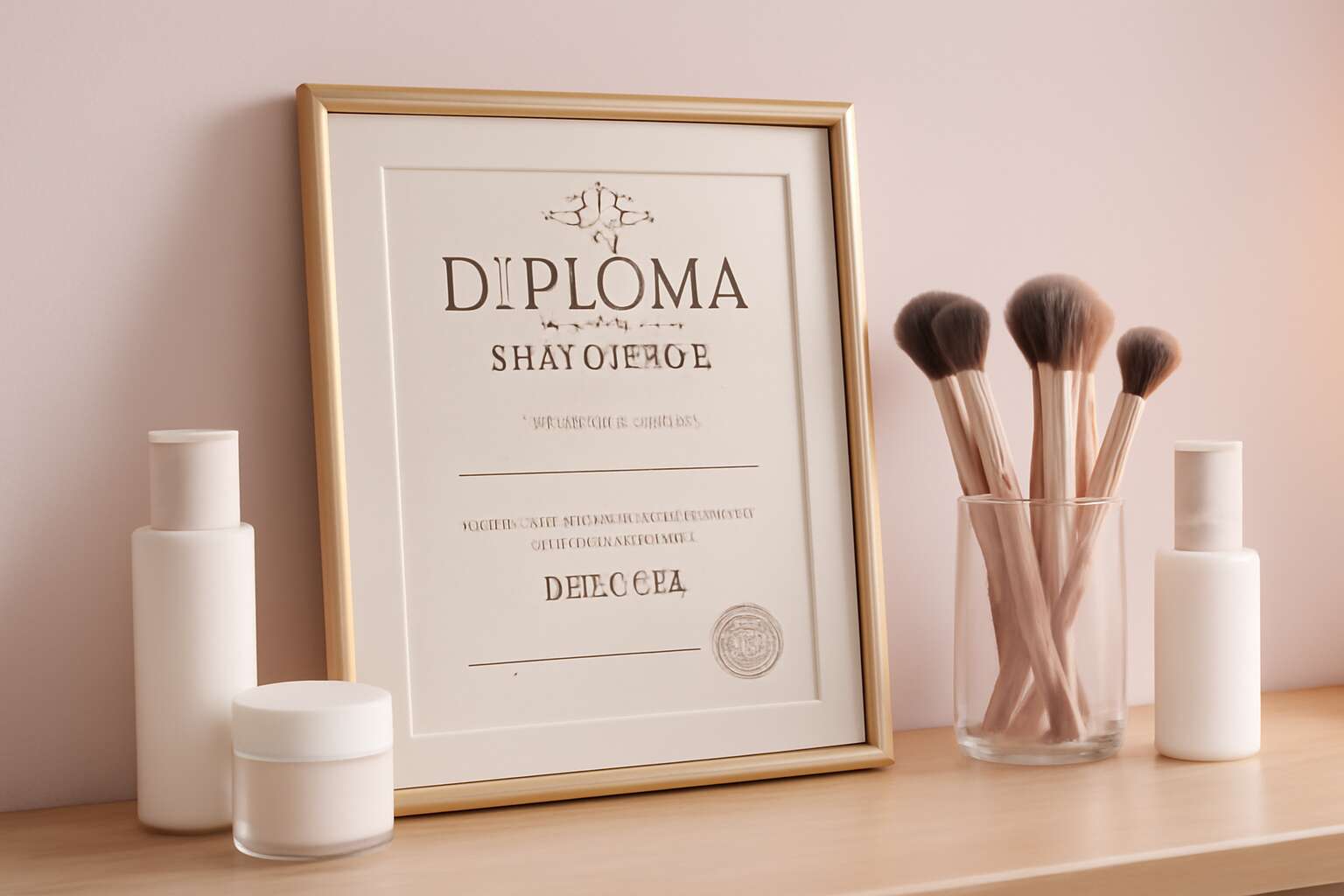
Understanding beauty qualifications and certifications
What is a professional beauty qualification and its certificate
“A certificate is the passport to professional trust,” notes a veteran beauty therapist, and in South Africa that passport is stamped by a beautician diploma certificate that often hangs with quiet pride in a salon. Qualifications are more than vanity; they signal safe technique and reliable results.
A professional beauty qualification is a structured blend of theory, practical skills, and rigorous assessment. In South Africa, these qualifications are registered on the National Qualifications Framework (NQF) and endorsed by SAQA, ensuring credibility across salons and clinics.
- Theory: anatomy, skin physiology, sanitation, and product safety
- Practical: hands-on competency across facials, waxing, makeup, and nails
- Assessment: formal exams, portfolios, and supervised practice
On completion, the credential signals a validated scope of practice and ethical professionalism, turning certification into more than a line on a resume; it’s a gatekeeper for client trust and career mobility.
Difference between diploma, certificate, and license in beauty industries
In the bustling salons of Cape Town and Joburg, qualifications act as a compass for both clients and practitioners! A visible beacon on the wall—a beautician diploma certificate—speaks of trained hands and disciplined practice. More than vanity, these credentials promise consistent, safe care across the industry.
Three common formats guide beauty careers: diplomas, certificates, and licenses. Each serves a distinct purpose—depth, focus, and formal permission to practice—yet they all share a commitment to quality.
- Diploma: longer program, broad scope, practical hours
- Certificate: shorter, skill-specific training
- License: regulatory permission, renewal and compliance
In South Africa, the diploma often anchors credibility in the eyes of clients and clinics, while ongoing education keeps pace with new techniques like tides that never sleep. The beautician diploma certificate can be refreshed through periodic updates to stay aligned with industry standards.
Core skills and competencies covered by a beauty program
In Cape Town and Joburg salons, a glow is more than makeup—it’s a map of learning. Understanding beauty qualifications and certifications reveals how skilled hands pair with safe practice to earn lasting trust. The term beautician diploma certificate signals a disciplined foundation and readiness for the next chapter in a bustling industry.
- Skin analysis and consultation techniques
- Sanitation, hygiene, and client safety
- Product knowledge and formulation basics
- Facial, waxing, and basic body treatment skills
- Ethics, record-keeping, and professional boundaries
Core competencies blend science and artistry: theory, hands-on technique, and client care. Fetch a toolkit that includes skin analysis, sanitation, product knowledge, and ethical service, tuned through practical hours and mentorship. In South Africa, these programs shape professionals who work confidently across clinics, spas, and salons on the pulse of the nation’s beauty scene.
Key benefits and outcomes of pursuing a beauty diploma
Career paths after completing a beauty diploma
Across South Africa’s bustling beauty salons, a beautician diploma certificate is more than a line on a resume—it’s a doorway to consistent client trust and rising responsibilities. “In a world where first impressions last, training converts passion into practice,” a seasoned salon owner often says. This credential translates ambition into real capabilities, shaping professionals who can travel from skincare to retail advice with confidence.
Key benefits include:
- Structured skill growth and confidence in delivering services
- Greater client satisfaction leading to repeat business
- Improved job mobility and pathways into specialisations
Career paths after completing a beauty diploma are diverse: spa therapist, skincare consultant, salon manager, makeup artist, lecturer, or starting your own studio. The South African market rewards professionals who couple artistry with business know-how, and ongoing training opens doors to higher earnings and leadership roles.
Salary potential and advancement opportunities in beauty roles
In South Africa’s buzzing salon scene, a single credential shapes client trust and career momentum. “The client spots the difference when service feels like art and intention,” a veteran salon owner notes, and the beautician diploma certificate is the instrument that turns that impression into lasting loyalty. This credential translates ambition into real capability, guiding practitioners who move from skincare to retail conversations with steadiness.
Key benefits include:
- Structured skill growth that builds service confidence
- Greater client satisfaction leading to repeat business
- Enhanced job mobility with pathways into leadership and specialisation
Salary potential follows credentialed growth: those who pair the beautician diploma certificate with hands-on experience forge stronger earning trajectories and leadership roles, from spa supervisors to training facilitators and entrepreneurial studio owners.
In a market that blends artistry with business sense, the diploma becomes not just a credential but a doorway to lasting professional impact.
Credibility, insurance, and client trust through formal certification
In South Africa’s bustling salons, credentials aren’t vanity—they’re velocity. The veteran salon owner says, “The client spots the difference when service feels like art and intention.” That subtle cue is sharpened by a formal qualification that clients can trust from the first consult to the last touch.
A beauty qualification backed by the beautician diploma certificate offers credibility insurers and clients alike can rely on. Formal certification helps meet safety and insurance standards, signals updated practice guidelines, and reassures clients that every service adheres to traceable, professional benchmarks.
Key outcomes include:
- Clear skill progression that boosts confidence in every treatment
- Stronger client trust and loyalty through consistent results
- Expanded career options, from leadership roles to specialised services
Specialization avenues and further study options
In SA salons, credibility isn’t perfume—it’s velocity. A veteran owner says, “Credentials are velocity.” When clients glimpse the beautician diploma certificate, the consult shifts from maybe to booked—trust is established before the first touch.
Key benefits and outcomes of pursuing a beauty diploma unfold in real life. Specialization avenues include:
- Skincare science and clinical facial therapies
- Makeup artistry for weddings, shoots, and events
- Lash and brow aesthetics for daily radiance
- Spa therapies and wellness rituals
- Beauty business leadership, product education, and salon management
For ongoing study, consider short courses, CPD credits, bridging diplomas, and online certificates. A beautician diploma certificate can unlock these pathways and keep your qualifications current.
Across the board, this translates to clearer skill progression, stronger client trust, and expanded career options—from senior roles to niche services—without losing the spark that keeps clients coming back.
Industry recognition and alumni networks
In South Africa’s bustling beauty scene, credibility travels faster than a salon chair on a turbo spin. “Credentials are velocity,” as one veteran owner likes to put it, and they’re not kidding. A beautician diploma certificate signals real mastery, turning the moment a client glances at your credentials into a booked consultation before you reach for the lamp.
- Industry recognition that signals professional competence and eligibility for advanced roles
- Active alumni networks offering mentorship, referrals, and continuing opportunities
- Access to exclusive events, trade shows, and CPD pathways that keep you ahead
Beyond the show reels, the payoff is talk-worthy visibility and a network that actually moves the needle. Alumni connections turn into referrals, case studies, and mentorship, letting you glide from boutique studios to top-tier spas with confidence. That credential becomes a passport to credibility that travels with you.
Choosing the right beauty program and school
Accreditation status and program legitimacy
“Quality education is the passport to a thriving beauty career,” a mentor repeats, a guiding truth. Choosing the right beauty program and school matters more than glossy brochures: look for a curriculum that blends theory with hands-on practice, ample salon-style simulations, and instructors who still shape looks in real studios. Your path toward a standout beautician diploma certificate begins with what the classroom and clinic hours truly offer.
Accreditation status and program legitimacy are non-negotiables in South Africa. Find schools with SAQA recognition and a reputable SETA, transparent syllabi, and measurable outcomes. To verify legitimacy, consider these checks:
- Official SAQA and SETA accreditation
- Clear learning outcomes and syllabus
- Strong industry connections and practicum
Curriculum depth: theory, hands-on practice, and clinical hours
Each aspiring beautician carries a pocketful of hopes—the right training can turn them into trusted artisans. “The right curriculum is your passport to a thriving beauty career,” a mentor reminds us, and in South Africa that passport is earned through immersive learning and steady practice. That journey culminates in a beautician diploma certificate.
Curriculum depth matters more than glossy brochures. A solid program fuses theory with hands-on practice and generous clinic hours, letting students test techniques on real clients before stepping into the salon.
- Theory grounded in client care and safety
- Hands-on practice in controlled, salon-style settings
- Clinical hours that simulate busy studio demand
Choose a program that respects time in the chair as much as time in the classroom. When the path leads to a well-structured beautician diploma certificate, you’ll carry confidence into conversations with clients and employers.
Admission requirements and prerequisites to enroll
Across South Africa, credibility in the beauty chair is earned, not promised. “The right curriculum is your passport to a thriving beauty career,” a mentor reminds us, and that passport comes from immersive learning and steady practice.
Choosing the right beauty program means more than chasing a name. Seek a course that blends solid theory with hands-on practice and real clinic hours—your future clients will feel the difference in the chair. The payoff is straightforward: a beautician diploma certificate.
- Accreditation and industry recognition
- Small class sizes with personalized feedback
- Strong internship or apprenticeship partnerships
- Flexible scheduling for working students
Admission requirements to enroll can be straightforward. You’ll typically need to be 16 or older, with a valid ID and proof of address, plus basic English proficiency and a recent academic record. Prepare these documents: a current ID or passport, your latest transcript, proof of address, passport photos, and the completed application form.
Program formats: on-campus, online, or hybrid
In South Africa, the right beauty program acts like a passport to a thriving career. A mentor once said, “immersive learning opens doors faster than glossy brochures.” Seek a course that blends solid theory with hands-on practice and real clinic hours—the kind that leaves future clients feeling the difference in the chair. The beautician diploma certificate you earn is the tangible beacon that follows you into every appointment.
Format matters; here are the main paths.
- On-campus: face-to-face mentorship, live demonstrations, and real-time feedback in supervised clinics.
- Online: flexible, self-paced modules with solid theory and virtual simulations you can study anywhere.
- Hybrid: the best of both worlds—scheduled in-person clinics with online theory to suit busy schedules.
Choosing the right format aligns with your lifestyle and accelerates your journey toward the beautician diploma certificate.
Facilities, equipment, and instructor quality
In South Africa, the beauty market climbs steadily, with demand rising by roughly 8% each year. The right beauty program is your compass toward a thriving career. The beautician diploma certificate you earn becomes a beacon in the chair, granting confidence from first client to last compliment.
Facilities, equipment, and instructor quality shape every appointment. Seek a school with clean, supervised clinics, rigorous safety routines, modern skincare devices, and mentors who offer clear, real-world feedback.
- Realistic clinical hours in supervised settings
- Strong hygiene and sterilization protocols
- Up-to-date skincare machines and tools
- Small classes with accessible, experienced instructors
- Well-equipped treatment rooms that feel like a spa
When you pick a program that blends theory with hands-on practice, the beautician diploma certificate feels earned in every confident gesture.
Course structure, assessments, and student expectations
Module breakdown and learning outcomes
In South Africa’s buzzing beauty scene, a beautician diploma certificate isn’t just ink on paper—it’s your passport to client trust. “Certification isn’t extra—it’s weatherproofing for confidence,” a SA salon owner likes to say.
Course structure blends theory with hands-on mastery and clear milestones toward the qualification. Expect practical assessments, simulated consultations, and theory checks, all documented in a professional portfolio. Students are expected to maintain hygiene, arrive prepared, and communicate with empathy—because the aim is work-ready professionals who earn trust with every appointment.
Module breakdown and learning outcomes map to essential skills. For example:
- Module 1: Skin science, assessment, and treatment planning.
- Module 2: Practical techniques, sanitation, and client care.
This structure reinforces the value of the qualification and signals readiness to clients and employers alike.
Practical assessments, portfolios, and exams
South Africa’s beauty scene hums with energy, and a clear course structure guides that momentum. The beautician diploma certificate sits at its heart—“Certification isn’t extra—it’s weatherproofing for confidence,” as one SA salon owner likes to say—and our program blends theory, hands-on practice, and milestone checks that keep learners moving toward qualification with confidence.
Assessments are woven into weekly progress, not saved for the end. To gauge readiness, expect a concise mix of practical assessments, portfolios, and exams.
- Practical assessments where skills are demonstrated on real or simulated clients
- Portfolio reviews documenting hygiene, treatment planning, and client communication
- Theory examinations testing core concepts and safety standards
Student expectations reflect the profession: arrive prepared, maintain impeccable hygiene, and communicate with empathy! Documentation and punctuality aren’t extra—they’re the first impression clients notice and insurers expect.
Safety, sanitation, and professional ethics
Here in SA, a salon owner puts it plainly: “Certification isn’t extra—it’s weatherproofing for confidence.” That belief guides a course structure crafted to ride momentum from the first module to graduation.
The program blends theory, hands-on practice, and milestone checks. Assessments are woven into weekly progress—practical assessments, portfolios, and exams—so learners advance with purpose toward the beautician diploma certificate.
- Practical assessments on real or simulated clients
- Portfolio reviews: hygiene, planning, client communication
- Theory exams: core concepts and safety
Student expectations mirror the profession: arrive prepared, maintain impeccable hygiene, and communicate with empathy. Documentation and punctuality aren’t optional—they form the first impression clients notice and insurers expect.
Safety, sanitation, and professional ethics are taught as a lived ethos, guiding every service from consult to close—the beautician diploma certificate is earned through this journey. The result is a confident, compliant professional ready for the stage of service.
Certification outcomes, licensing, and career guidance after graduation
Regional licensing requirements and timelines
Stories from salons show a well-earned beautician diploma certificate isn’t just ink on paper—it’s a passport to professionalism. Certification signals competence, safety, and a certain glow of confidence that clients can feel before you pick up a brush. That combination translates into steadier bookings and trust.
Licensing after graduation follows regional rules. Here are typical steps:
- Confirm your local licensing body and SAQA recognition.
- Compile proof of your diploma, first aid, and identity documents.
- Complete any supervised practicals or examinations required by your region.
- Submit an application and await registration approval (timelines vary by province).
With licensing in hand, I’ve seen graduates explore a spectrum of roles—from bustling salons to mobile beauty teams and boutique spas. Build a compelling portfolio, network strategically, and let client satisfaction drive the next appointment.
Exams, continuing education, and renewal rules
“Certification is the passport to credibility,” says a veteran salon owner. A beautician diploma certificate isn’t just ink on paper—it signals safety, skill, and a glow clients can feel before you even pick up a brush. The payoff? steadier bookings and rock-solid trust.
Licensing after graduation follows regional rules. Typical steps include confirming the licensing body and SAQA recognition, compiling proof of your diploma and first aid, completing any supervised practicals, and submitting the application for registration. Timelines vary by province.
- Exams and practical assessments required by the regional authority
- Proof of diploma, first aid, and identity documents
- Application submission and waiting period for approval
With credentials in hand, graduates enter bustling salons, mobile beauty teams, or boutique spas. Build a compelling portfolio, network strategically, and let client satisfaction drive the next appointment. Exams, continuing education, and renewal rules keep the career bright and compliant.
Job search strategies for new graduates
Certification outcomes after earning a beautician diploma certificate are tangible: client safety, refined technique, and a signature glow that speaks before the first brush touches skin. In South Africa, licensing after graduation follows regional rules and SAQA recognition, but the real payoff is the confidence radiated in every service—from consult to cleanse to finish. That credential translates into steadier bookings, warmer referrals, and a growing personal brand in salons, mobile teams, and boutique spas.
Career guidance after graduation centers on visibility and authentic connection. Build a portfolio that tells the client story, and let results do the talking. Job search strategies for new graduates include targeted applications, leveraging alumni networks, and gaining practical experience through internships or entry-level roles in local salons or spas.
- Tap SAQA-recognized salons for internships
- Showcase a concise portfolio and tailored CV
- Attend local events to meet employers
Entrepreneurship and setting up a beauty business
Trust is the most radiant makeup in a South African beauty room. “Beauty begins with trust,” says a veteran therapist, and in SA that trust rests on certified care. The client’s glow starts before the first brush, with credentials that promise safety and skilled hands.
With a beautician diploma certificate, outcomes are tangible: safer experiences, refined technique, and a signature glow that speaks before you greet. Licensing in South Africa follows regional rules, underpinned by SAQA recognition. The credential translates into steadier bookings, warmer referrals, and a growing personal brand.
Career guidance after graduation centers on visibility and authentic connection. Build a portfolio that tells the client story, and let results narrate your progress. The beautician diploma certificate opens doors in salons, mobile teams, and boutique spas, where craft meets entrepreneur spirit in graceful, enduring ways.

0 Comments