
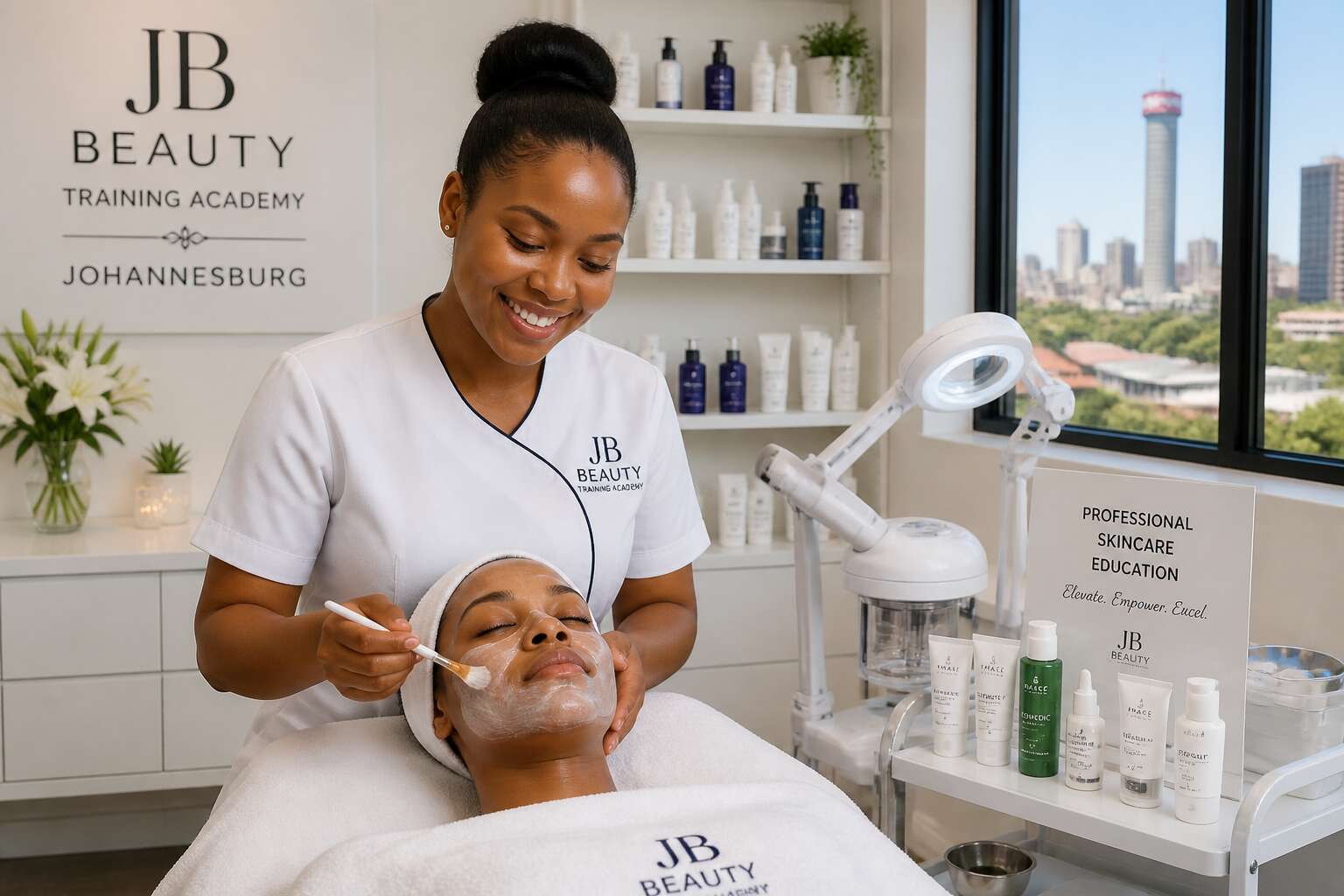
Understanding the Beauty Industry Landscape in Johannesburg
Market Growth and Demand for Skilled Professionals
Johannesburg’s beauty sector now employs thousands of professionals across salons, spas, and freelance operations. The city’s expanding middle class continues to drive demand for quality services, from skincare treatments to specialised nail artistry. This growth has created a noticeable gap between the number of available positions and the pool of trained applicants.
Consider what a salon owner faces when hiring:
- A steady stream of clients expecting advanced techniques
- Limited candidates with formal qualifications
- High turnover for staff without proper training
This is where formal training matters. Beautician courses Johannesburg institutions offer provide the practical grounding that employers increasingly require. Without that foundation, professionals struggle to meet the exacting standards of an industry where reputation travels quickly.
Key Beauty Sectors: Skincare, Makeup, and Nail Artistry
Every appointment in Johannesburg’s beauty sector carries unspoken weight. The client reveals skin, scars, or insecurity, and the professional responds with skill and judgment. This exchange carries moral weight beyond technical ability.
Skincare professionals encounter damaged barriers, often worsened by clients chasing quick fixes. Makeup artists balance creative vision with a client’s identity. Nail technicians practise exacting precision under strict hygiene standards.
Beautician courses johannesburg prepare students for these pressures. I have watched graduates struggle when their training covered only theory. Reputable beautician courses johannesburg ground students in the following:
- Skincare demands diagnostic patience and product chemistry knowledge
- Makeup work requires adaptability across skin tones and occasions
- Nail artistry demands hand discipline and uncompromising sterilisation
The industry evaluates everything. Every interaction becomes part of a reputation that moves through local salons.
Employment Opportunities in Salons, Spas, and Freelancing
Johannesburg rewards professionals who understand its rhythms. The city’s employment landscape is not a single path but a network of distinct opportunities, each demanding a different temperament and skill set. Beautician courses johannesburg provide the foundational knowledge, but the real education begins when you step into the field.
Salons offer structure and a steady clientele. Spas demand a focus on holistic wellness and relaxation. Freelancing, however, is a different beast entirely, requiring self discipline and business acumen. I have seen graduates thrive in each arena, but success depends on matching your personality to the environment.
– Salon roles provide consistency and team collaboration.
– Spa positions emphasise relaxation and therapeutic technique.
– Freelancing offers flexibility but demands self promotion.
Each setting is a classroom. The skills you acquire from beautician courses johannesburg are your starting point, a passport to a city that is always watching for the next talented professional. Your career is built on the reputation you cultivate in these spaces.
Emerging Trends Influencing Beauty Education
The beauty landscape in Johannesburg is evolving quickly. Sustainability and inclusivity are no longer optional extras. They form the bedrock of client expectations. This reality is compelling beautician courses johannesburg to overhaul traditional lesson plans. Students now study ingredient transparency and salon waste reduction alongside classic techniques. Digital skin analysis tools have also entered the classroom, bridging the gap between theory and real world diagnostics.
I find this evolution fascinating because it reflects the city itself. Consider the emerging influences:
- Custom formulation for melanin rich skin is now a standard module.
- Product selection exercises teach eco conscious purchasing.
- Practical assessments require adapting treatments to humid Johannesburg summers.
The result is a graduate who understands local nuance, not just international trends. Beauty education here is becoming a direct response to social and environmental pressures. For anyone weighing beautician courses johannesburg, this represents a more relevant path forward.
Choosing the Right Educational Path
Accredited Training Providers vs. Independent Academies
A salon owner told me, “A qualification is only as good as the institution that issued it.” That explains why choosing between accredited training providers and independent academies matters for beautician courses Johannesburg. Accredited providers follow the SAQA framework, giving your certificate recognised status. Independent academies offer flexible schedules and lower fees, but some lack formal assessments. I saw students regret skipping accreditation.
Consider this:
- Accredited courses include formal assessments and work integrated learning.
- Independent academies may offer faster completion and smaller classes.
- Accreditation determines whether your certificate holds value beyond the classroom.
Weigh the paperwork carefully, because your earning potential depends on it!
National Qualifications and International Certifications
National qualifications operate within South Africa’s NQF framework. International certifications, such as CIDESCO or ITEC, are recognised abroad. They answer different questions. A local salon owner understands the NQF levels. An overseas employer may only recognise the international credential.
Some academies offering beautician courses Johannesburg bundle both pathways into a single programme. That sounds efficient, but it doubles your examination costs. You also need to maintain separate memberships.
- NQF qualifications comply with local labour regulations.
- International certifications require annual renewal fees.
- Both credentials demand practical assessments, though the standards differ.
Students pursuing beautician courses Johannesburg often assume a prestigious international name outweighs local recognition. The reverse applies when you stay in South Africa. The choice depends on where you intend to work, not where the certificate sounds impressive.
Specialized Courses: Aesthetics, Cosmetology, and Bridal Makeup
I have watched many students enter beautician courses johannesburg with longing for glamour, to discover that glamour is byproduct of discipline. The real decision begins when you choose a lane. Aesthetics requires an interest in skin chemistry and tolerance for lengthy consultations. Cosmetology rewards versatility, but it spreads your practice thin. Bridal makeup is a high-pressure performance art, where client’s family is your audience.
Before you enrol, examine the curriculum for these signals:
- Proportion of practical hours versus theory lectures
- Access to live models or real clients during training
- Instructor experience in your chosen specialty
A programme that dedicates three weeks to eyelash extensions but one afternoon to face shapes is telling you its priorities. Your specialisation should match your natural strengths, not market’s loudest trend. I once met a therapist who did electric facial treatments; her diary was full for two months. That is the power of deliberate path!
Part-Time, Full-Time, and Online Study Options
According to a 2023 survey, 38% of trainee beauticians in Gauteng balance part-time jobs with their studies. That reality should inform how you evaluate full-time, part-time, and online options for beautician courses johannesburg. Full-time study compresses your training into an intense block, which suits people with savings. Part-time study extends the timeline but preserves your income. Online theory courses offer convenience, yet they cannot replace the tactile experience of a facial or a waxing treatment.
Your daily rhythm matters more than the brochure. Some students excel in morning practicals, while others perform poorly after lunch. When reviewing beautician courses johannesburg, consider your energy levels and transport logistics before making a choice.
- Inspect the timetable for practical sessions
- Confirm whether online lectures are recorded
- Ask about weekend access to training rooms
Each mode carries its own friction. Full-time demands focus. Part-time demands endurance. Online demands self-discipline.
Importance of Practical Experience and Internships
The true measure of any beautician courses johannesburg lies in the practical hours. You cannot learn a lymphatic drainage massage from a slide deck. Your hands need repetition. Your fingertips need feedback from real skin. That is where internships change everything.
A good academy connects you with working salons where clients expect results. You learn to adapt when a treatment goes wrong. You learn speed. You learn hygiene under pressure. Those are the skills that make you employable.
- Ask how many supervised practical hours are in the curriculum
- Confirm whether the academy has an in-house training salon
- Request details on how internship host sites are vetted
Treat the internship as the core of your education. The theory supports it. The certificate validates it. But the internship is where you build the confidence that clients feel on the treatment bed.
Key Skills and Training Components
Hands-On Practical Sessions and Client Interaction
In beautician courses johannesburg, the curriculum rests on technical dexterity and interpersonal acuity. These skills are not abstract ideals. They are drilled into students through supervised practice on real clients, often under clinic conditions.
Consider the range of tactile skills a student must master before graduation. A short list makes the scope clear:
- Performing facial and body treatments with precise pressure and product selection
- Applying makeup for different skin tones and face shapes
- Executing nail artistry with correct sterilization and filing techniques
Client interaction in beautician courses johannesburg demands active listening, questions about allergies and lifestyle, and the ability to explain procedures without jargon. Students learn to read non-verbal cues and adjust their approach when a client shows discomfort. They also practice managing bookings, handling feedback, and maintaining professional boundaries. These sessions replicate the working salon environment, so the transition from classroom to chair feels familiar.
Theoretical Foundations: Anatomy, Products, and Safety Protocols
The skin reveals more than beauty. It carries the story of sunburns and allergies. In beautician courses johannesburg, students begin with anatomy, learning to read symptoms and contraindications from the body’s largest organ. They study layers, nerves, and blood flow. A wrong product choice on compromised skin can trigger reactions that scar a client for life.
Products become tools of precision. Students study active ingredients, pH, and preservatives. They learn why retinol demands caution in sunlight and why certain acids cannot mix. Safety protocols underpin every treatment! Sterilization, contamination control, and emergency procedures become instinct.
Key knowledge includes:
- Skin types and their physiological markers
- Contraindications for eczema, rosacea, or infections
- Correct storage and expiry tracking
- Emergency response for allergic reactions
I have watched this foundation separate a technician from a therapist. Beautician courses johannesburg test it daily, keeping clients safe as they close their eyes and trust your hands.
Business and Marketing Skills for Beauty Entrepreneurs
The most gifted technician can still fail if they cannot sell their own skill. Many therapists enter this industry believing artistry alone will carry them. It will not. The business side of beauty is where careers are built or broken, and this is why beautician courses johannesburg now dedicate serious time to entrepreneurial training.
Marketing is no longer just a flyer in a local café. Students learn to read analytics on social media, understand client retention metrics, and price services based on market positioning. They study the psychology of consumer loyalty, learning how a first consultation becomes a decade of repeat visits. The curriculum forces a shift in mindset from employee to owner.
Client communication is taught as a strategic skill. Handling complaints, upselling treatments, and managing booking systems are all part of the daily grind. Many graduates open their own studios, so the training covers basic financial literacy, tax registration, and supplier negotiations.
Common business modules include:
– Brand identity development and visual consistency
– Pricing strategies that reflect skill level and overheads
– Customer relationship management systems for follow-ups
– Legal compliance for small beauty businesses
I have seen students enter these beautician courses johannesburg with pure passion and leave with a commercial brain. They understand that a treatment room is a business floor. The ones who thrive are those who treat every client interaction as a marketing opportunity, not just a service.
Communication and Customer Service Excellence
Communication separates a routine treatment from a loyal following. Students in beautician courses johannesburg learn that the first greeting sets the emotional temperature of the entire appointment. Active listening, reading body language, and tailoring conversation to each client’s comfort level are drilled into daily practice.
Complaint resolution is handled as a skill, not a personality trait. Trainees practise de-escalation techniques and learn when to offer a solution versus when to simply acknowledge frustration. Follow-up communication, whether a thank-you message or a reminder of aftercare, builds retention.
The curriculum emphasises these human elements as core competencies:
– Consultation questioning techniques
– Managing difficult personalities
– Verbal and non-verbal cue recognition
– Post-treatment aftercare instructions
Therapists who master this layer of the work turn single bookings into standing appointments. Their chairs stay full because their clients feel heard, not just serviced.
Hygiene, Sanitation, and Professional Ethics
In the high-touch salon environment, hygiene comes before any cosmetic skill. Beautician courses johannesburg treat sanitation as a non-negotiable discipline. Students learn to sterilise tools, manage single-use consumables, and rotate stock to prevent cross-contamination. Each station is reset with the same rigour, every time.
Professional ethics extend beyond the treatment room. Confidentiality, informed consent, and honest product recommendations are core. Students practise recording accurate client notes and handling allergic reactions with clear escalation procedures. The ethical therapist knows when to refer a client to a medical professional. That boundary protects both parties.
Core hygiene competencies include:
- Disinfection protocols for metal and porous tools
- Hand hygiene and gloving techniques
- Waste disposal for single-use items
- Sanitising work surfaces between appointments
These skills are assessed through practical observation. A beautician courses johannesburg graduate understands that hygiene failures are the fastest way to lose a licence and a reputation.
Comparing Course Costs and Durations
Typical Tuition Fees Across Johannesburg Institutions
Deciding between training routes often comes down to your budget and schedule. In Johannesburg, tuition fees for beautician courses vary dramatically, from R12,000 for a three month certificate to R45,000 for an advanced diploma spanning a full year. Some institutions bundle kit costs, while others charge separately, which can shift your total outlay significantly.
Duration matters just as much. I have seen weekend programmes stretch over six months for working students, whereas intensive weekday tracks finish in eight weeks. Here is a typical snapshot:
- Short certificate: 6 to 10 weeks, R10,000 to R18,000
- Comprehensive diploma: 6 to 12 months, R25,000 to R50,000
- Specialised modules: 2 to 4 days, R2,500 to R7,000
Your choice among beautician courses johannesburg should reflect both your financial ceiling and how quickly you need to earn. Cheaper often means fewer practical hours, so compare the full timetable, not just the price tag.
Program Lengths: Short Courses vs. Diploma Programs
Choosing between a short course and a diploma for beautician courses johannesburg often comes down to time commitment. Short courses, typically six to ten weeks, deliver targeted skills for immediate entry into the workforce. Diploma programs stretch over six to twelve months and build a broader foundation.
For working students, weekend tracks offer flexibility, while full-time diplomas demand consistent attendance. A short course suits someone seeking a quick career pivot, whereas a diploma provides depth in anatomy, advanced techniques, and client management.
- Short courses: faster completion, lower cost, basic practical hours
- Diplomas: comprehensive training, higher employability, longer schedule
Ultimately, the right length aligns with your goals and available study time.
Hidden Costs: Kits, Materials, and Examination Fees
Johannesburg’s beauty academies quote tuition with admirable confidence, yet the final bill often arrives with the subtlety of a hangover. The advertised price for beautician courses johannesburg is merely the opening bid in a negotiation with your own bank account.
Materials, kits, and examination fees lurk beneath the surface. Some institutions include starter kits in their fees; others present a list of essential purchases on day one, forcing students to reconcile their dreams with the cost of a decent brush set. Comparison shopping becomes an exercise in reading fine print.
- Treatment products for practical sessions
- Assessment and certification charges
- Replacement costs for consumables
A cheaper quote can prove dearer once you tally the extras, so ask precisely what your rand purchases before signing.
Scholarships and Payment Plans Available
The cost of beautician courses johannesburg varies by academy, and the quoted fee reveals only part of the total. The other half lives in training hours, theory to practice ratios, and the months you dedicate to the craft. Some programs rush through a makeup module in six weeks; others stretch a diploma across two years. The shorter path may save money but can leave you with a certificate that salons regard with suspicion. Compare durations.
A less discussed factor is how you pay. Several academies offer scholarships for exceptional applicants, though rarely advertised. When comparing beautician courses johannesburg, ask about deferred options, interest-free arrangements, and upfront settlement discounts. Payment plans, when available, split tuition into monthly instalments. Do not assume a rigid structure!
- Total training hours included in the fee
- Duration of practical assessment
- Scholarship criteria and deadlines
- Penalty clauses for missed instalments
Weigh these factors to avoid unexpected financial surprises.
Career Prospects and Professional Growth
Job Placement Support and Industry Connections
Johannesburg’s beauty industry rewards graduates who understand the business behind the craft. Quality beautician courses johannesburg providers maintain direct relationships with salons, spas, and freelance platforms, opening doors before you even graduate.
Placement support often includes CV workshops, interview preparation, and referral networks. Some academies host recruitment days where owners observe practical assessments live. That is your chance to demonstrate technique under pressure!
- Internship placements in high volume Sandton salons
- Mentorship from working therapists
- Access to supplier and product house networks
Career growth follows measurable milestones, not luck. Many graduates move from junior therapist to senior stylist within two years because they invested in courses that emphasize client retention. Strong industry connections make that progression possible.
Licensing and Registration Requirements in South Africa
Not every therapist dreams of owning a studio empire, but every serious professional wants control over their career trajectory. In South Africa, that control begins with proper registration. The beauty industry here operates with specific legal parameters, and understanding them protects your clients and your reputation.
Licensing requirements vary by municipality. Most Johannesburg metros require a Certificate of Compliance for your treatment space, whether you work from a salon floor or a home studio. This ensures your equipment, sanitation practices, and waste disposal meet local health standards. Beyond municipal approval, you need professional indemnity insurance. Without it, a single allergic reaction or accidental burn could end your practice.
The allied health professions council, often referred to as AHPCSA, regulates certain aesthetic modalities. For advanced treatments like needling or chemical peels beyond a certain depth, registration with this body becomes non-negotiable. Beautician courses johannesburg providers that cover these distinctions prepare you for real-world compliance. Here is what a complete registration pathway typically includes:
1. Completing an accredited training program with a recognized certificate
2. Applying for municipal health clearance for your practice space
3. Securing professional indemnity and public liability insurance
4. Registering with relevant professional bodies like SABP or AHPCSA
5. Maintaining continuous professional development points for renewal
Do not underestimate the paperwork. Salons in Sandton and Rosebank routinely request proof of registration before offering you a chair. Freelance platforms now verify therapist credentials before listing your services. The therapists who move forward fastest are those who treat licensing as a career investment rather than administrative burdens.
Professional growth follows a predictable pattern once your registration is active. Specialization drives higher earning potential. A therapist with certified laser training commands higher rates than a generalist. Continuous education ensures your registration stays current and your skills remain relevant. The beauty landscape in Johannesburg rewards those who treat their professional standing as seriously as their craft.
Advanced Training and Specialization Pathways
Advanced training raises a therapist’s earning potential. In Johannesburg, the difference between a general beautician and a specialist is measured in months of focused study. Therapists with advanced certifications in medical aesthetics, permanent makeup, or chemical exfoliation position themselves for high-end clinics or independent studios.
The beauty industry rewards depth. A therapist with expertise in a niche area, such as corrective camouflage or lash lifting, builds a loyal clientele that generalists cannot access. Career progression follows a trajectory from salon employee to senior therapist, then to educator or business owner.
Specialization pathways worth considering:
- Medical aesthetics, bridging beauty and clinical skincare
- Advanced nail technology, including sculpting and art
- Bridal and editorial makeup for event-driven income streams
- Body sculpting and non-invasive contouring techniques
Each pathway requires its own certification, and beautician courses johannesburg providers offering modular training allow you to stack credentials strategically. Professionals who treat beautician courses johannesburg as an ongoing investment adapt fastest when market preferences shift.
Building a Personal Brand and Client Portfolio
Career prospects depend on your ability to build a visual identity. Some graduates of beautician courses johannesburg pass technical exams yet struggle to attract steady clients. The difference often lies in personal branding and a documented portfolio.
A portfolio demonstrates real experience. Include clear before and after images, written client consent, and samples of unusual treatments. If you specialise in a niche service, photograph every stage. This evidence separates you from generic applicants.
- Consistent photography from multiple angles
- Client quotes with permission
- Detailed notes on custom techniques
- Updates after each new course
Personal branding pushes further. It involves shaping your communication style, pricing structure, and follow up routines. The practical knowledge from beautician courses johannesburg builds confidence, but lasting growth comes from showcasing your unique approach until it becomes recognizable.
Salary Expectations and Career Progression
Earnings in this field often surprise newcomers. Completing beautician courses johannesburg typically leads to entry level salaries between R6,000 and R9,000 per month, before tips and commission. Those figures climb quickly for professionals who build technical speed and client loyalty. A focused therapist can double their income within four years.
Most careers follow a clear progression path:
- Junior beautician handling basic treatments
- Senior beautician with an established regular clientele
- Head therapist supervising junior staff
- Trainer or product specialist for a reputable brand
Each move up transforms your daily responsibilities. Administration, rostering, and quality control replace service work.
The upper earning bracket belongs to those who treat beauty as a business. Therapists at premium Johannesburg salons earn R25,000 or more monthly by bringing their own clientele and commanding higher prices. In my experience, progression is rarely linear, but it rewards those who keep learning and maintain professional discipline.
Continuing Education and Masterclasses
One of the most reliable indicators of long term success in this industry is a commitment to ongoing education. The beauty landscape in Johannesburg shifts quickly, with new product formulations and advanced techniques arriving constantly. A therapist who relies solely on what they learned in their initial beautician courses johannesburg will eventually fall behind. Masterclasses and refresher workshops are the primary methods for closing this gap. They allow you to refine methods that are directly relevant to local skin types and climate conditions. This focus on practical application ensures you are learning what clients in this market actually need, not just theoretical global trends.
Continuing education in this field has changed from a yearly luxury to a professional requirement. Many employers now check for recent certificates before considering an applicant. Graduates who actively pursue advanced modules in areas such as chemical peels or lash artistry often command higher rates and face better job security.
Consider the type of professional growth that interests you most:
– Advanced nail restoration techniques
– Medical-grade skincare protocols
– Men’s grooming and barbering methods
– Specialized corrective makeup application
A dedicated therapist who builds a portfolio of ongoing training signals real commitment to their craft. This reputation travels quickly in Johannesburg’s professional beauty circles. Masterclasses are also a great way to meet other practitioners and product suppliers, creating a network that assists with referrals and employment leads down the line. The learning process itself, if approached with genuine curiosity, becomes a professional asset that makes your work more engaging. Those who stop learning usually find their careers plateau, while those who attend regular workshops keep their daily work fresh and financially rewarding.

0 Comments